Last updated on December 22, 2025
The opening moves in backgammon are crucial for setting the stage and gaining an early advantage. How you start the game can have a big impact on the rest of the match. In this guide, we’ll go over some of the main objectives you should focus on when making your opening moves. These goals will help you position your checkers, block your opponent’s progress, and set yourself up for a strong game. Whether you’re new to the game or just looking to improve your strategy, understanding these backgammon opening goals is a great place to start.
The opening position
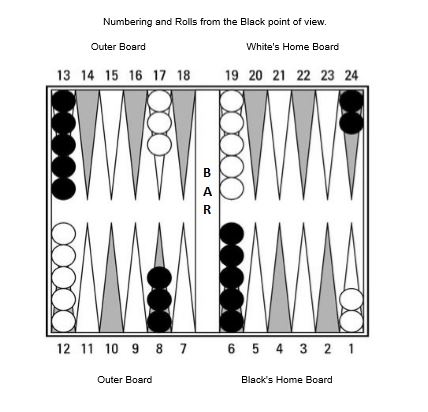
Take a look at the diagram below to see how the game begins. The points are numbered from Black’s perspective, so you’ll want to keep referring to it as we go through the strategies. This starting layout sets the stage for your opening moves, which are all about gaining control and momentum.
Opening objectives
The first few moves in backgammon can set the tone for the whole game. Here are the key backgammon opening goals to focus on:
Get your back checkers into action
Your two checkers on the 24-point are way behind the rest of your team, which is grouped around the 6-point to the 13-point. This creates a big problem because they’re vulnerable and disconnected. You need to fix that quickly. One option is to sprint them forward into the outfield (aim for points 14, 15, 16, or 18). Another, often better, choice is to move them a bit forward and build a defensive position known as an advanced anchor. Anchors on points 18, 20, or 21 are fantastic because they give your back checkers a safe spot and make it easier to escape later when the opportunity arises.
Block your opponent’s back checkers
Remember, your opponent is trying to do the same thing with their back checkers. Blocking their progress is just as important as advancing your own. Focus on securing key blocking points, especially your 5-point, 7-point, and 4-point. The more you block, the harder it’ll be for them to free their back checkers, which buys you valuable time and space to play your game.
Prepare to build blockades
It’s rare to roll a perfect block right away, so you’ll need to set things up. Bring down builders from your midpoint (the 13-point) to create opportunities for blocks on your next turn. These builders act like stepping stones for future moves. Just be careful—they’re exposed blots until you use them, so your opponent might hit them if they get a lucky roll.
Hit whenever possible
Backgammon is basically a race, and hitting your opponent’s checkers slows them down while giving you an edge. If you get the chance to send one of their checkers back to the start, take it. Hitting is almost always a strong move in the early game, and it’s rare to make a big mistake doing it. Keep an eye out for openings to strike later on, as the board changes with every roll.
Spread out your checkers
Right now, you’ve got five checkers piled up on both your 6-point and your midpoint (13-point). That’s way too many in one place. These extra checkers aren’t pulling their weight, so it’s important to move them to other points where they can be useful. Ideally, aim for three checkers per point—two to hold it and one to act as a builder for future points. By spreading them out, you open up more possibilities for creative plays.
Keep your opponent on their toes
Sometimes you’ll have two moves that seem equally good. When that happens, pick the option that makes life harder for your opponent. For example, leave them with tricky decisions or force them to take risks. Backgammon is as much about psychology as strategy, so if you can throw them off their game, you’re already winning
Conclusion
Mastering the opening moves in backgammon is key to setting up a successful game. By focusing on advancing your back checkers, blocking your opponent, and creating strategic positions, you’ll have a solid foundation for the rest of the match. Don’t forget to adapt your strategy as the game progresses, keeping your opponent guessing and staying one step ahead. With these opening goals in mind, you’ll be better prepared to control the game and gain the upper hand early on.